b. March 5th, 1929 in Monticello (Mississippi)
d. April 29th, 1967 in Champaign (Illinois)

I WANNA PLAY A LITTLE WHILE
Jasmine
Late 1950 - July 1960

J.B. est le fils de Roberta Ratliff et de Dewitt Lenoir, un bluesman réputé dans la région. C'est ce dernier qui lui appris la guitare. Influencé par Arthur "Big Boy" Crudup et Lightnin' Hopkins, il joue aux côtés de "Sonny Boy" Williamson et Elmore James dans le sud au cours des années 40. En 1949, J.B. s'installe à Chicago, aidé par Big Bill Broonzy pour s'intégrer dans la communauté blues de la ville. Grâce à Broonzy et Memphis Minnie, il peut enregistrer pour le label J.O.B dès 1950, puis Parrot, un peu plus tard. Son style fait alors la synthèse entre le Chicago Blues et le Rhythm & Blues. Son succès grandissant lui permet de graver pour Chess (et sa marque Checker) sous la bienveillante supervision de Willie Dixon. Après une collaboration - magnifique mais limitée dans le temps - J.B. se retrouve au creux de la vague. Il enregistre sporadiquement pour différents labels comme Shad, Vee-Jay ou Blue Horizon. Cette compilation éditée par le label anglais Jasmine reprend l'intégralité de cette première décennie de la carrière de J.B. Lenoir.
J.B. was the son of Roberta Ratliff and Dewitt Lenoir, a renowned local bluesman. It was his father who taught him to play the guitar. Influenced by Arthur "Big Boy" Crudup and Lightnin' Hopkins, he performed alongside "Sonny Boy" Williamson and Elmore James in the South during the 1940's. In 1949, J.B. moved to Chicago, aided by Big Bill Broonzy in integrating into the city's blues community. Thanks to Broonzy and Memphis Minnie, he was able to record for the J.O.B. label starting in 1950, and later for Parrot. His style blended Chicago Blues with Rhythm & Blues. His growing success led to recordings for Chess (and its subsidiary Checker) under the watchful eye of Willie Dixon. Following a magnificent but short-lived collaboration, J.B.'s career hit a slump. He recorded only sporadically for various labels such as Shad, Vee-Jay or Blue Horizon. This compilation, released by the british label Jasmine, covers the entirety of that first decade of J.B. Lenoir's career.
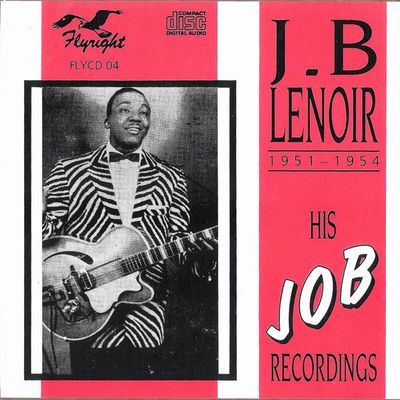
HIS JOB RECORDINGS
Flyright
Paula
October 1951 - January 1953
Thanks to Big Bill Broonzy et Memphis Minnie, la carrière de J.B. Lenoir démarre réellement lorsqu'il débute sa collaboration avec le label de Joe Brown, J.O.B. Pour ce label, il développe ce style original mêlant Chicago Blues et Rhythm & Blues qui fera sa renommée, ainsi qu'une voix haut perchée assez particulière. Entre 1951 et 1953, il délivre de superbes morceaux en compagnie de Sunnyland Slim et J.T. Brown : "I'll die tryin'", "The mountain", "How much more", "The mojo", "Slow down woman", "Play a little while", "Louise". Certains morceaux seront revendus à Chess.
Thanks to Big Bill Broonzy and Memphis Minnie, J.B. Lenoir’s career truly took off when he began collaborating with Joe Brown's J.O.B. label. It was there that he developed his distinctive style blending Chicago Blues and Rhythm & Blues that would make him famous, as well as a unique, high-pitched vocal style. Between 1951 and 1953, he released superb tracks alongside Sunnyland Slim and J.T. Brown such as "I'll die tryin'", "The mountain", "How much more", "The mojo", "Slow down woman", "Play a little while", "Louise". Some of these tracks were subsequently sold to Chess.
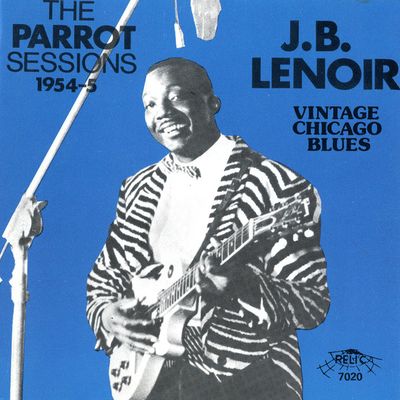
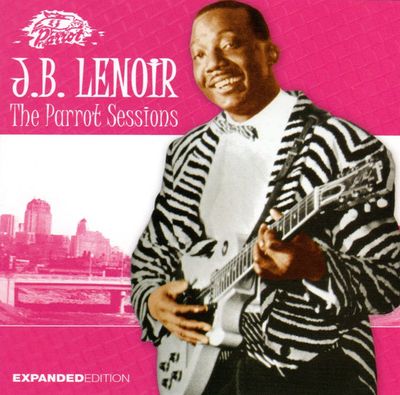
THE PARROT SESSIONS
Relic
April 1954 - March 1955
Peu après avoir quitté J.O.B., J.B. Lenoir enregistre pour le label Parrot (dirigé par Al Benson). En une poignée de séances (parfois sous le nom de J.B. Lenore), il délivre ses titres les plus marquants dans son style particulier : le boogie "Mama talk your daughter" - qui deviendra un standard du blues - et les pièces politiques que sont "Eisenhower blues", "I'm in Korea", "Tax paying blues" (une seconde version d'"Eisenhower blues"). Mais, il ne faut pas oublier également "Sittin' down thinkin'", "Mama your daughter's gonna miss me", "Man watch your woman", "Fine girls", "Give me one more shot".
Shortly after leaving J.O.B., J.B. Lenoir recorded for the Parrot label (run by Al Benson). Over the course of a handful of sessions (sometimes under the name J.B. Lenore), he delivered his most striking tracks in his distinctive style : the boogie "Mama talk your daughter" - which would become a blues standard — and political songs such as "Eisenhower blues", "I'm in Korea", "Tax paying blues" (a second version of "Eisenhower blues"). However, one must not overlook "Sittin' down thinkin'", "Mama your daughter's gonna miss me", "Man watch your woman", "Fine girls", "Give me one more shot".
NATURAL MAN
Chess
Late 1950 - December 1956
CHICAGO GOLDEN YEARS
Chess
GONNA GIVE YOU GOOD ADVICE
Chess
Late 1950- 1958
MAMA WATCH YOUR DAUGHTER
Charly
April 1954 - 1958
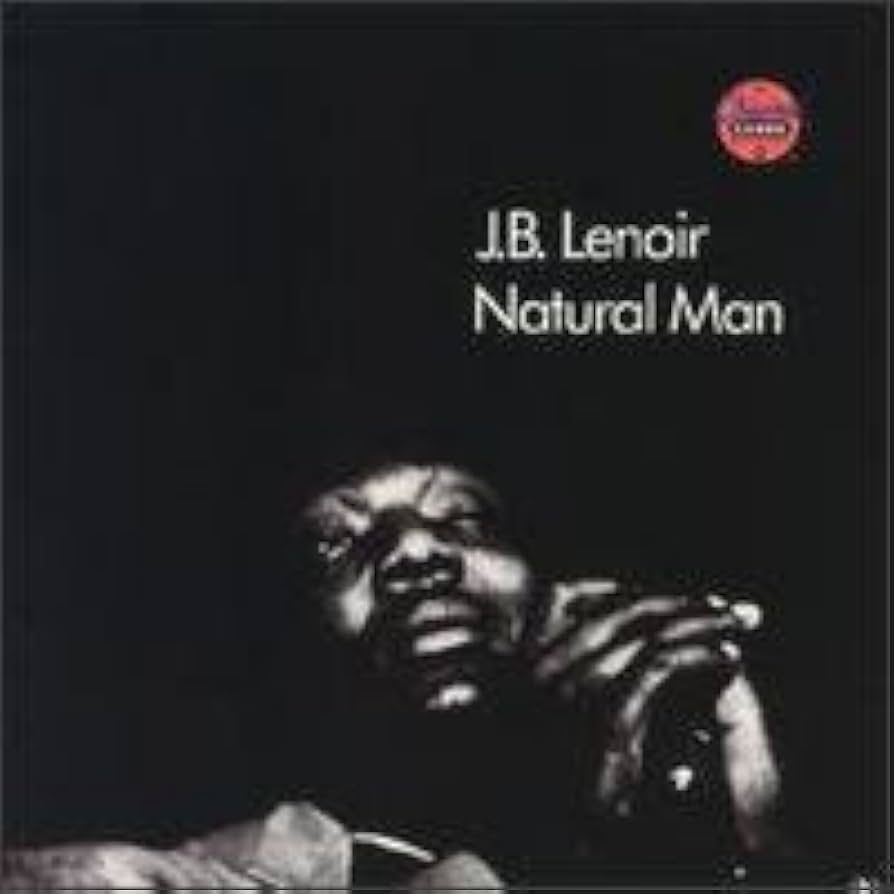
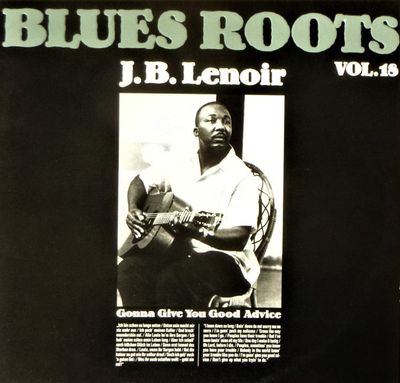
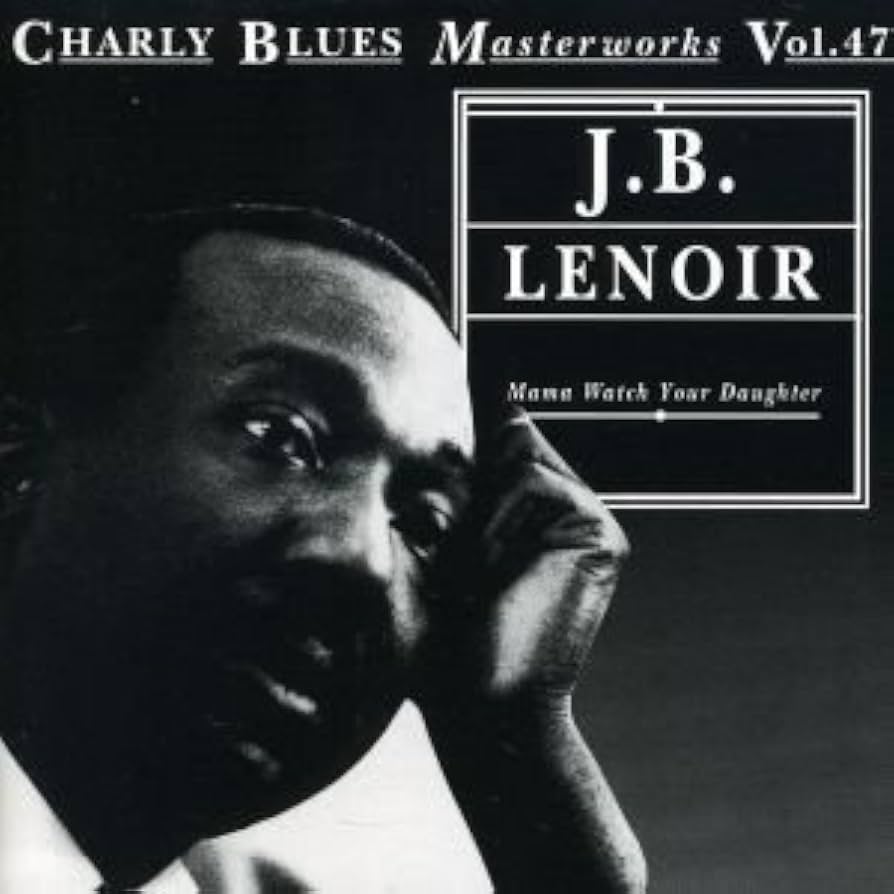
A la fin de 1950, J.B. Lenoir enregistra quatre morceaux qui devaient initialement être publiés par J.O.B. Ils furent rachetés par Chess qui les proposa sous sa marque (deux morceaux sur les quatre présents dans certaines de ces anthologies). Après sa période Parrot, J.B. Lenoir collabora vraiment avec Chess-Checker, notamment sous la supervision de Willie Dixon. Entre septembre 1955 et 1958, il poursuit les enregistrements dans son style habituel : un Chicago Blues cuivré proche du Rhythm & Blues dominé par une voix haut perchée. A cette époque, il grave les excellents "Natural man", "Don't dog your woman", "Mama what about your daughter", "Don't touch my head", "I've been down so long", "If you love me", "Voodoo boogie". De nombreuses anthologies reprennent cette oeuvre de premier plan.
In late 1950, J.B. Lenoir recorded four tracks originally intended for release by J.O.B. They were acquired by Chess and issued under its label (two of the four tracks appear in some of these anthologies). Following his stint with Parrot, J.B. Lenoir worked extensively with Chess-Checker, notably under the supervision of Willie Dixon. Between september 1955 and 1958, he continued recording in his signature style : a horn-driven Chicago Blues — akin to Rhythm & Blues — dominated by his high-pitched vocals. During this period, he cut excellent tracks such as "Natural man", "Don't dog your woman", "Mama what about your daughter", "Don't touch my head", "I've been down so long", "If you love me", "Voodoo boogie". Numerous anthologies feature this outstanding body of work.
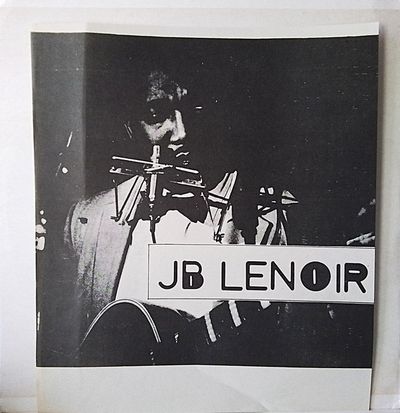
J.B. LENOIR
Python
August 1958 - May 1960
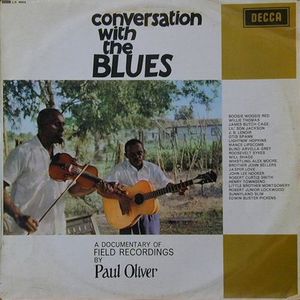
CONVERSATION WITH THE BLUES
Decca
July 1960
Dans cette anthologie compilant les enregistrements de terrain réalisés par Paul Oliver, on trouve J.B. Lenoir qui fut enregistré à Chicago en juillet 1960 par l'ethnomusicologue. Il évoque son enfance avec son père bluesman et joue le superbe morceau acoustique "I been down so long".
This anthology, compiling field recordings made by Paul Oliver, features J.B. Lenoir, who was recorded in Chicago by the ethnomusicologist in july 1960. He talks about his childhood with his bluesman father and performs the superb acoustic track "I been down so long".
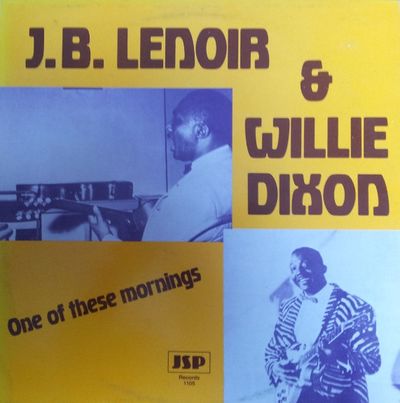
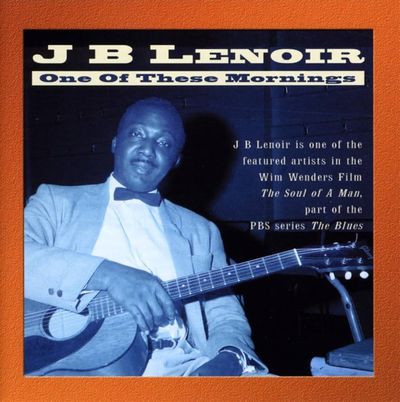
ONE OF THESE MORNINGS
JSP
Autumn 1962 / May 1965
Lors de l'automne 1962, alors que la carrière de J.B. Lenoir marque un peu le pas, Willie Dixon lui propose de jouer un blues acoustique dans le but de le relancer. Pour ce faire, il enregistre cette démo au domicile de J.B. avec un simple magnétophone. Une séance informelle qui vaut surtout pour son aspect historique (on entend J.B. et Willie converser à plusieurs reprises) puisque la seconde partie de carrière de J.B. Lenoir sera essentiellement acoustique. Dans ce disque, on trouve donc cette démo de 1962 ainsi que différentes bandes de 1965 (certaines furent filmées par les étudiants suédois Ronnog & Steve Seaberg).
In the autumn of 1962, as J.B. Lenoir’s career was stalling, Willie Dixon suggested he play acoustic blues in an effort to revitalize it. To that end, he recorded this demo at J.B.’s home using a simple tape recorder. It was an informal session notable primarily for its historical value — capturing J.B. and Willie conversing on several occasions — given that the second phase of J.B. Lenoir’s career would be essentially acoustic. This record therefore includes that 1962 demo alongside various tapes from 1965 (some of which were filmed by swedish students Ronnog and Steve Seaberg).
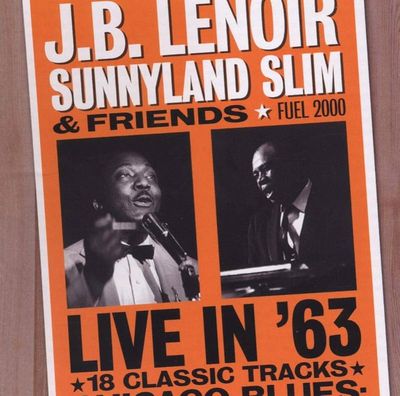
LIVE IN '63
Fuel 2000
July 1963
Une soirée dans un club du West Side de Chicago capturée par Norman Dayron. On entend principalement Sunnyland Slim et J.B. Lenoir avec l'appui occasionnel de John Lee Granderson, St Louis Jimmy et même le jeune Mike Bloomfield. J.B. chante sur six titres en leader.
An evening at a Chicago West Side club captured by Norman Dayron. We mainly hear Sunnyland Slim and J.B. Lenoir with occasional support from John Lee Granderson, St Louis Jimmy and even young Mike Bloomfield. J.B. sings on six tracks as a leader.
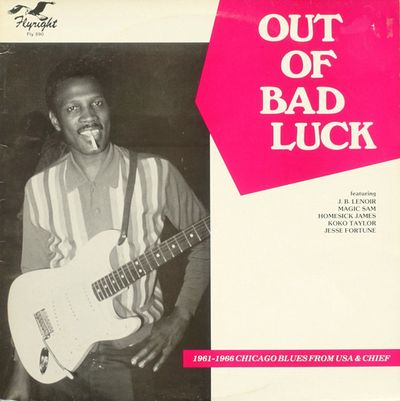
OUT OF BAD LUCK
Flyright
July 1963
Dans cette anthologie, on trouve des prises alternatives enregistrées pour le label U.S.A ("I sing um the way I feel" et "I feel so good").
This anthology includes alternate takes recorded for the U.S.A. label ("I sing um the way I feel" and "I feel so good").
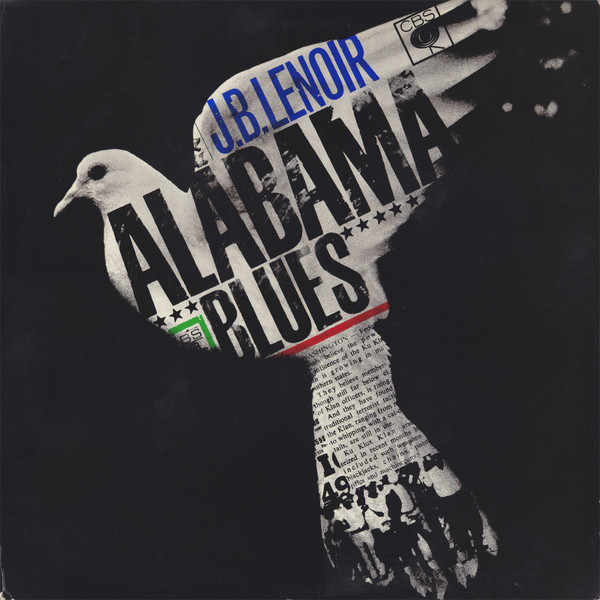
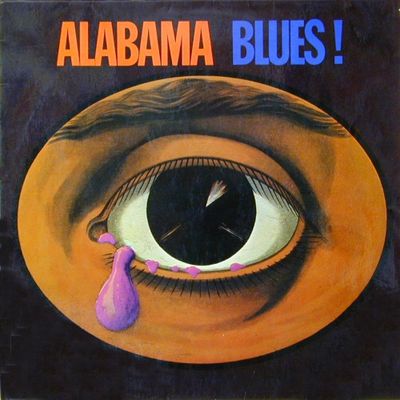
ALABAMA BLUES
CBS
Scout
L+R
Blue Angel
VIETNAM BLUES
Evidence
May 1965
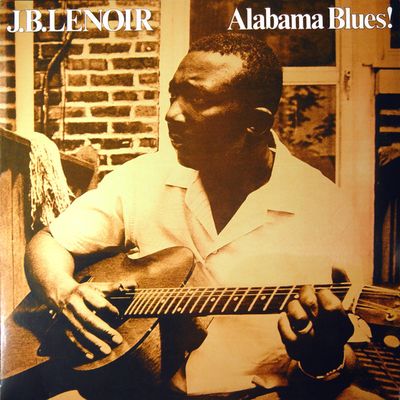
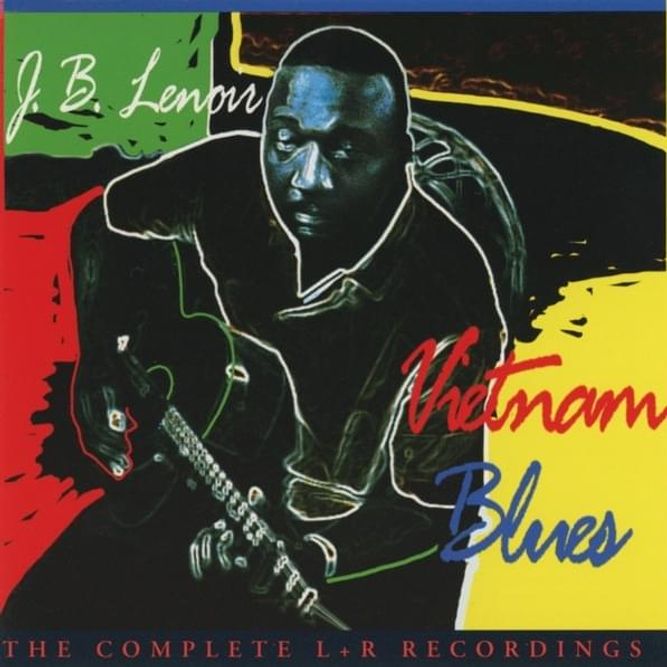
En 1962, Willie Dixon avait suggéré à J.B. Lenoir - alors sans engagement - de se tourner vers le blues acoustique au lieu de la forme orchestrale qu'il pratiquait jusqu'alors. A l'époque, ils avaient enregistré une prometteuse démo qui fut éditée par JSP ("One of these mornings"). Mais, il faudra finalement attendre mai 1965 pour qu'une séance, digne de ce nom, voit le jour grâce à Willie Dixon et Horst Lippmann. Seul à la guitare, parfois avec le support du batteur Fred Below, J.B. Lenoir propose une poignée de blues profonds et évocateurs comme "Alabama blues", "Mojo boogie", "I feel so good", "The whale has swallowed me", "Mississippi road", "Good advice", "Vietnam blues". Cette séance remarquable a connu plusieurs éditions LP. Elle fut aussi rééditée dans le CD "Vietnam blues" en 1995.
In 1962, Willie Dixon suggested that J.B. Lenoir — who was without a contract at the time — switch to acoustic blues rather than the orchestral style he had previously played. They recorded a promising demo back then which was released by JSP ("One of these mornings"). However, it was not until may 1965 that a truly significant recording session took place thanks to Willie Dixon and Horst Lippmann. Performing solo on guitar — sometimes accompanied by drummer Fred Below — J.B. Lenoir delivered a handful of deep, evocative blues tracks, such as "Alabama blues", "Mojo boogie", "I feel so good", "The whale has swallowed me", "Mississippi road", "Good advice", "Vietnam blues". This remarkable session has seen multiple LP releases and was also reissued on the 1995 CD "Vietnam blues".
AMERICAN FOLK BLUES FESTIVAL '65
Fontana
L+R
October 1965
Après sa belle séance acoustique organisée par Willie Dixon et Horst Lippmann, J.B. Lenoir est engagé pour la tournée de l'American Folk Blues Festival de 1965. Accompagné de l'harmoniciste Big Walter Horton, il joue, dans ce disque studio, le superbe "Slow down woman".
Following the fine acoustic session organized by Willie Dixon and Horst Lippmann, J.B. Lenoir was hired for the 1965 American Folk Blues Festival tour. Accompanied by harmonica player Big Walter Horton, he performs the superb "Slow down woman" on this studio album.
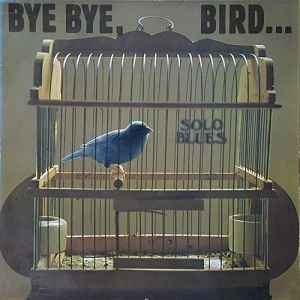
BYE BYE BIRD SOLO BLUES
Scout
October 1965
Un superbe titre acoustique enregistré lors de la tournée de l'American Folk Blues Festival de 1965 : "Everybody crying about Vietnam".
A superb acoustic track recorded during the 1965 American Folk Blues Festival tour : "Everybody crying about Vietnam".
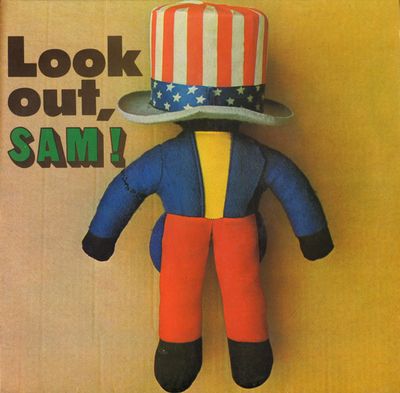
LOOK OUT SAM
Scout
October 1965
Dans cette anthologie, on trouve deux excellents morceaux gravés lors de la séance studio de l'American Folk Blues Festival de 1965.
This anthology features two excellent tracks recorded during the 1965 American Folk Blues Festival studio session.
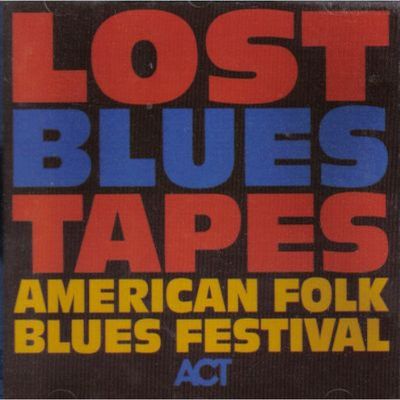
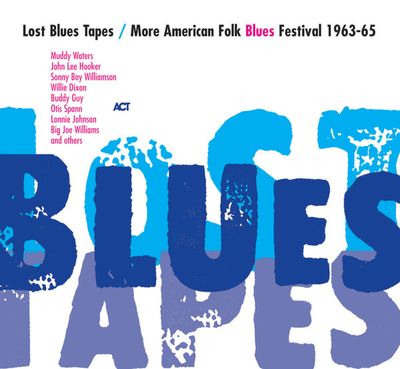
THE LOST BLUES TAPES vol.1
ACT
October 1965
On trouve ici une belle version de "If I get lucky" gravée lors de la séance studio de l'American Folk Blues Festival de 1965.
Here you will find a fine version of "If I get lucky" recorded during the 1965 American Folk Blues Festival studio session.
J.B. LENOIR
Polydor
Crusade
DOWN IN MISSISSIPPI
L+R
Blue Angel
VIETNAM BLUES
Evidence
Autumn 1962 / September 1966
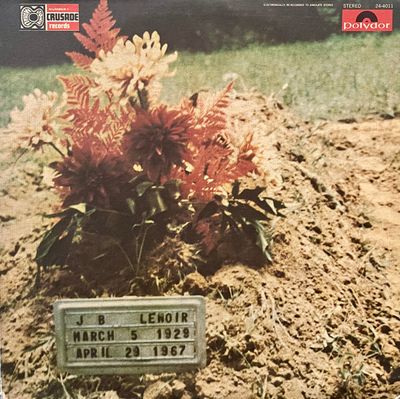
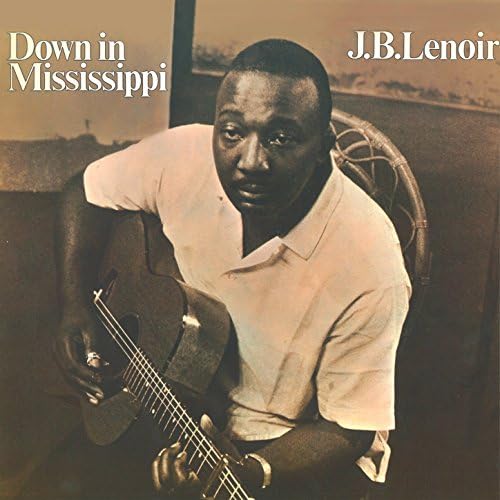
En septembre 1966, Willie Dixon et le producteur allemand Horst Lippmann organisent la dernière séance acoustique de J.B. Lenoir avant sa mort accidentelle. Comme précédemment, J.B. joue seul à la guitare occasionnellement accompagné de la batterie discrète de Fred Below. Il délivre de superbes blues très émotionnels, n'hésitant pas à aborder des thèmes sociaux ou politiques : "Down in Mississippi", "If I get lucky", "Shot on James Meredith", "Born dead", "Vietnam blues", "Tax payin' blues", "How much more". Il décède à la suite d'un accident de voiture en avril 1967. Le LP Polydor, édité en 1970, reprend l'intégralité de la séance et ajoute trois titres d'une précédente séance de l'automne 1962. En 1980, Horst Lippmann, le producteur qui avait participé à l'organisation de ces séances, la réédite sur son label L+R. Enfin, le label Evidence a réédité cela en CD en 1995.
In september 1966, Willie Dixon and german producer Horst Lippmann organized J.B. Lenoir's final acoustic session before his accidental death. As before, J.B. performed solo on guitar, occasionally accompanied by Fred Below's soft drumming. He delivered superb, deeply emotional blues songs, unafraid to tackle social or political themes : "Down in Mississippi", "If I get lucky", "Shot on James Meredith", "Born dead", "Vietnam blues", "Tax payin' blues", "How much more". He died following a car accident in april 1967. The Polydor LP, released in 1970, included the entire session plus three tracks from an earlier session in the autumn of 1962. In 1980, Horst Lippmann — the producer who had helped organize these sessions — reissued the material on his L+R label. Finally, the Evidence label reissued it on CD in 1995.